
PROJECTS
BIOFICTION AND THE NINETEENTH CENTURY
Biofiction and the Nineteenth Century
Biofiction and the Nineteenth Century : Explores the convergence of contemporary biofiction and neo-Victorian criticism to analyze 19th-century historical figures
The project “Biofiction and the Nineteenth Century: Gender and Ethics in Contemporary Transatlantic Culture” (CIGE/2021/140) is premised on the fact that the 19th century marked such a momentous turning point in the definitive development of global modernity, that contemporary authors have never ceased to engage in an ontological scrutiny of the roots of our cultural identities in the light of that century, which is often seen as the inaugural period of many of our concerns, values and social struggles that are still prevalent today. Among English-speaking critics interested in this prevalence of nineteenth-century referents, the term neo-Victorianism circulates with fecundity as a global concept that includes not only cultural projects inspired by or set in the Victorian era, but also theoretical reflections on the ruptures, changes or enduring affinities between us and our nineteenth-century ancestors. Critics such as Gutleben (2001), Krueger (2002), Kaplan (2007), Joyce (2007), Kohlke (2008), Arias and Pulham (2009), Heilmann and Llewellyn (2010), and Mitchell (2010) have contributed decisively to the conceptualisation and development of this critical discourse by laying the foundations of neo-Victorian theory, tracing the origins of the contemporary taste for nineteenth-century aesthetics, and identifying the close kinship between neo-Victorianism, postmodernism, feminism, and trauma and memory studies. In more recent years, neo-Victorian criticism has achieved a greater degree of specialisation and diversification with novel work focusing on steampunk (Bowser and Croxall 2010), contemporary gothic (Kohlke and Gutleben 2012), fashion and visual materiality (Boehm-Schnitker and Gruss 2012), global dissemination and postcolonial contexts (Ho 2012; Lai-Ming Ho 2019), performing and cinematic arts (Poore 2017; Primorac 2018), representations of queer subjects (Tomaiuolo 2018; Heilmann 2019) or biofiction on historical figures of the 19th century (Kohlke and Gutleben 2020).
The growing influence of neo-Victorian criticism coincides with the development of innovative research into contemporary biofiction inspired by real figures from the past. At the forefront of much of this research is American critic Michael Lackey with at least eight significant works: Conversations with Jay Parini (2014), Truthful Fictions: Conversations with American Biographical Novelists (2014), The American Biographical Novel (2016), Biographical Fiction: A Reader (2017a), Conversations with Biographical Novelists: Truthful Fictions across the Globe (2018), Biofictional Histories, Mutations and Forms (2018), and Biofiction: An Introduction (2021). In these and other minor publications, Lackey (2017b) has demonstrated not only that biofiction “has become a dominant literary form over the last thirty years” (343), but also that there is a need for “more studies about famous figures who appear in multiple biographical novels, such as Eliza Lynch, Friedrich Nietzsche, Emily Dickinson, Ludwig Wittgenstein, Abraham Lincoln, and Nat Turner” (344). One of our aims, as we will explain below, will be to respond precisely to this need for new case studies specifically applied to contemporary fiction inspired by the lives of nineteenth-century historical subjects.
Neo-Victorianism:
The 19th century is viewed as a turning point in global modernity and remains a focal point for understanding cultural identities, values, and social struggles still relevant today.
Neo-Victorianism a global concept encompassing cultural projects inspired by or set in the Victorian era, as well as theoretical reflections on the connections and ruptures between contemporary society and 19th-century ancestors.
The focusing on their ethical impact, contributions to gender studies, and role in shaping collective memory.
In light of the above, it becomes immediately clear that neo-Victorianism and the study of biofiction are mature and consolidated critical disciplines in their own right, but it is their convergence that opens up a promisingly fertile space to be thoroughly explored, delimited and mapped. Our research project aims to occupy this convergent space, starting from a key hypothesis: contemporary European and American cultures show an ontological interest in understanding and negotiating the meanings and signifiers of our epistemic values and identities in direct dialogue with historical subjects of the 19th century who, whether from positions notoriety or marginality, contributed to the development of our democratic modernity. Based on this premise, our general aim is to measure, analyse and compare the evolution of contemporary biofiction inspired by the real lives of nineteenth-century figures in the light of its ethical foundations, its contribution to gender studies, its development in different traditions on both sides of the Atlantic, and even its pedagogical usefulness in promoting a moral sense of collective memory against cryptogyny –the systematic erasure of women, their contributions to history, and their achievements).
The results of these revisions, connections and analyses make up the bulk of the contents shared on this website: the case studies, the 2023 research seminar, and most of the output presented here as publications are direct products of this first project.
In order to achieve this general objective, we seek to address the following questions and challenges:
1.
To review and delimit the genre of contemporary biofiction in its relationship with the historical novel and with different terminological variants
2.
To formalise the theoretical and practical connections between neo-Victorian criticism and biofiction
3.
To analyse specific representations of nineteenth-century figures from a gender-based perspective that places special emphasis upon portrayals of peripheral women and rehabilitates nineteenth-century lives forgotten due to the hegemonic cryptogyny that pervades our cultures of the past
Elizabeth Gaskell
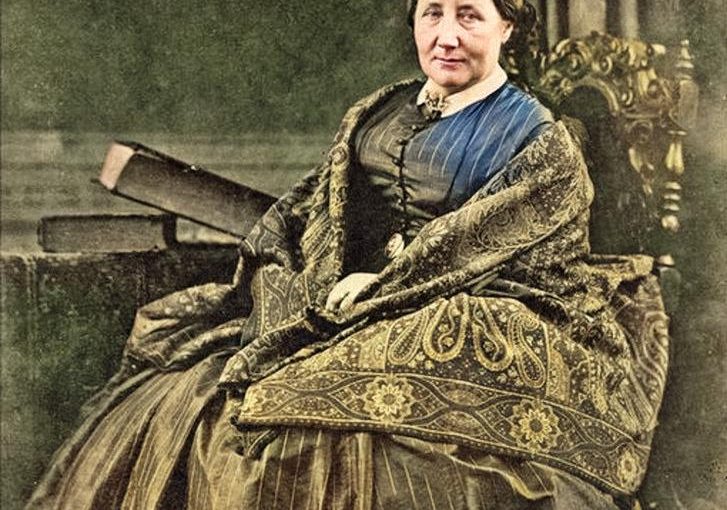
Elizabeth Cleghorn Gaskell (née Stevenson; 29 September 1810 – 12 November 1865), often referred to as Mrs Gaskell, was an English novelist, biographer, and short story writer. Her novels offer a detailed portrait of the lives of many strata of Victoriansociety, including the very poor. Gaskell’s The Life of Charlotte Brontë, published in 1857, was the first biography of Charlotte Brontë
The funding
The funding for our research has been provided by the Generalitat Valenciana (Conselleria de Educación, Universidades y Empleo) through two consecutive projects: “Biofiction and the Nineteenth Century: Gender and Ethics in Contemporary Transatlantic Culture” (CIGE/2021/140) and “Contemporary Biofiction: Peripheral Figures and Transnational Crossings” (CIGE/2023/50).

